An overview of the activities of the Smart Farm in 2021.
Annual Report- Olds College Smart Farm
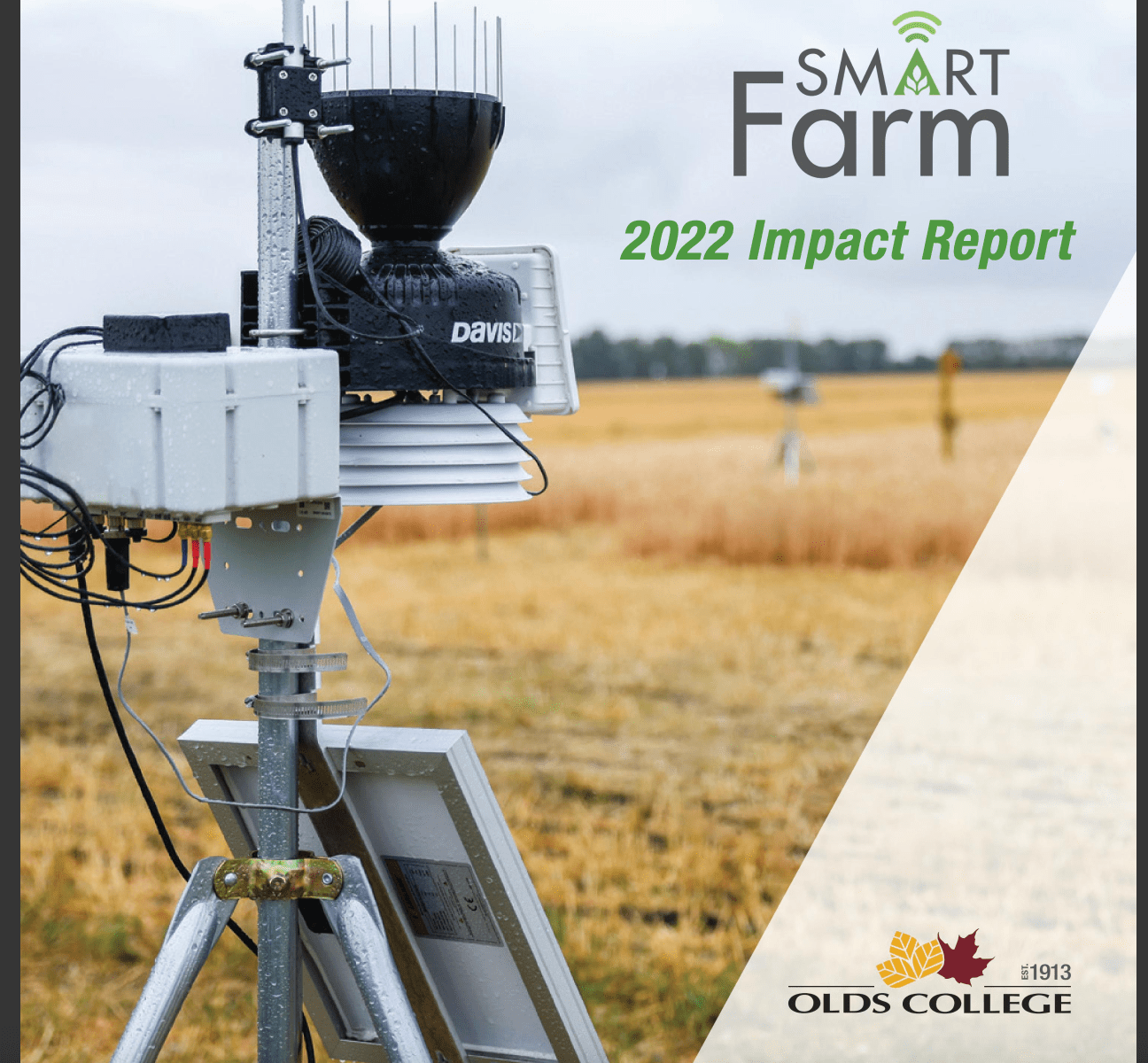
An overview of the activities of the Smart Farm in 2021.
April 26, 2022
Scouting and planned use of herbicides can help keep out invasive weeds and brush
Sustainability is a common theme in agriculture these days, and while grassland and forage are high on the list of sustainable land uses, they need proper management to stay healthy and provide the best value.
Isabelle Thibout, Product Manager for Horticulture, Pasture and Land Management at Corteva Agriscience, says producers have a variety of tools available to keep grass and pastures healthy. “We all know a healthy pasture leads to a healthy herd. The producer’s toolbox can include grazing rotation, fertility analysis and a health assessment of the pasture. Proper use of a Range & Pasture herbicide is another tool.”
Read the full article in Canadian Cattlemen’s here
In theory, the last couple of relatively hot and dry growing seasons should have slowed the progress of clubroot to canola fields across the Prairies. In practice, they didn’t. Why?
Researchers and plant breeders say the answer is that just as other weeds, pests and diseases evolve to thwart control methods, clubroot is doing the same. While they’re coming up with solutions to stay ahead, applying them will mean that farmers have to learn a bit of clubroot biology so they can make the right decisions when selecting canola varieties.
Read the complete article online – Western Producer.

Genetic variations are making hybrid selection, rotations even more important
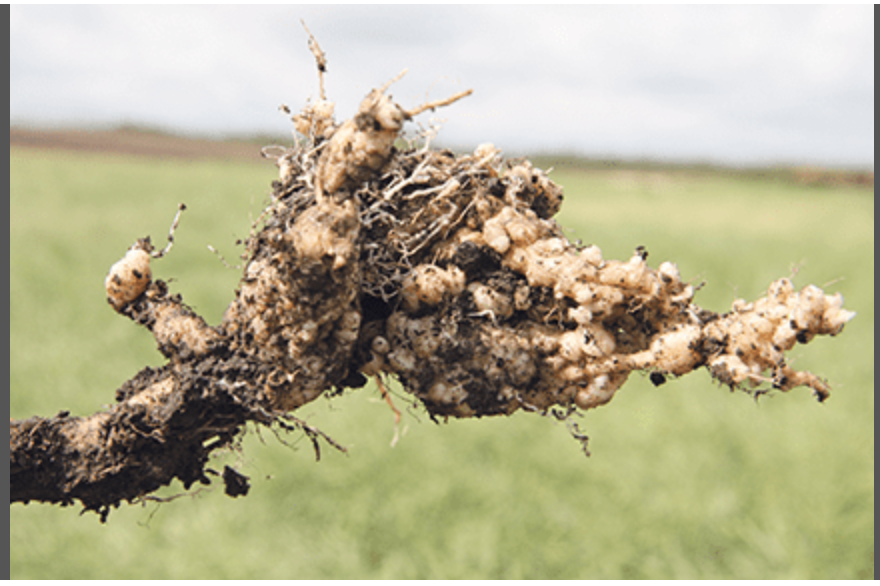
Last year, Doug Moisey, Pioneer Hi-Bred Agronomist with Corteva Agriscience™, Agriculture Division of DowDuPont watched with concern as clubroot was showing up in northwestern Saskatchewan and the Peace country, areas far removed from ground zero in St Albert, Alberta. This year, he is seeing it spread to more fields, including the latest in the municipal district of Rockyview, south of Calgary. Manitoba and Saskatch-ewan also have increasing clubroot confirmations, and in new areas.
Read the rest of the article in Western Producer.
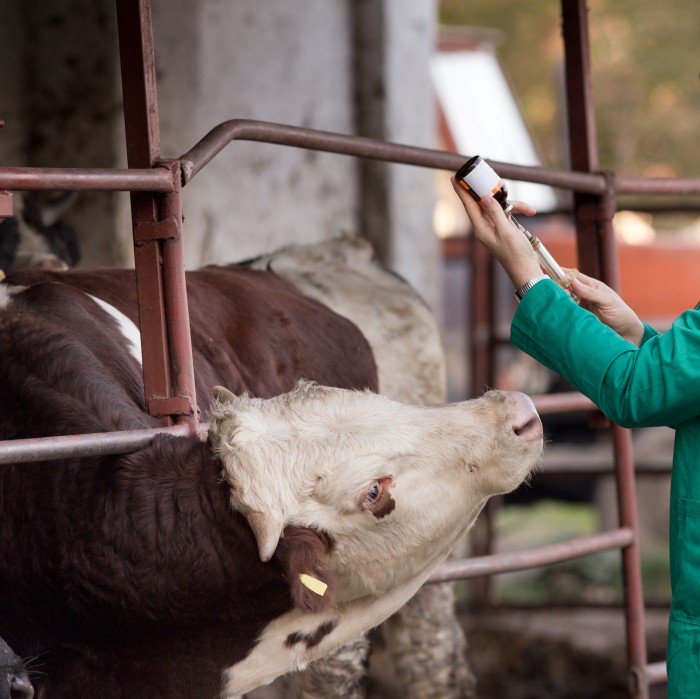
Pain management is becoming easier and cheaper, and pays dividends in animal performance and welfare.
You wouldn’t want to have surgery without something to manage the pain, and the livestock industry has realized that animals should have the same consideration.
“The industry identified pain management in livestock as an issue that it wanted to address,” says Dr. Robert Tremblay, DVM, a bovine specialist with Boehringer Ingelheim Animal Health. “As tools were developed to measure pain, research began to look for ways to manage that pain. Animal health companies followed and began making treatments available for use in livestock management. And producers and veterinarians began to see the positive impacts of managing pain in their herds.”
Read the full article online – Western Producer
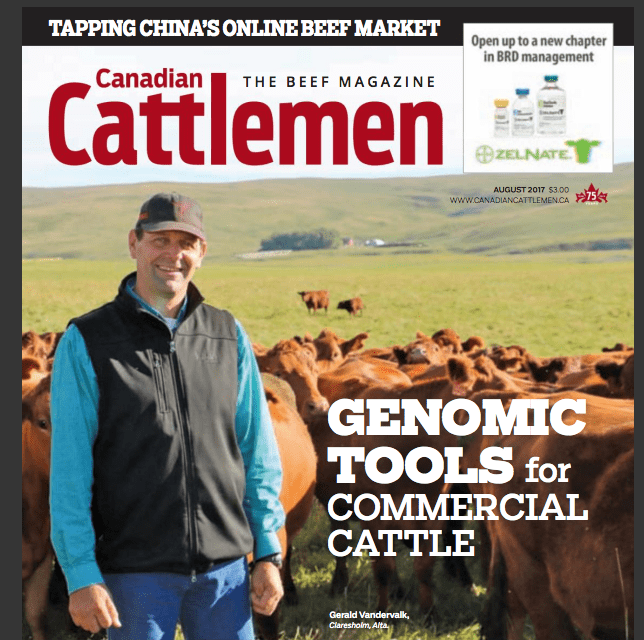
Is knowing your cattle’s DNA becoming a “need to have” instead of a “nice to have?”
In an industry where margins can be tight it’s often hard to justify the cost for something like a DNA test that seems “nice to have.” But what would the return on investment need to be to make DNA testing a “need to have” item on every farm and ranch?
That is a question researchers across Canada are stewing over as genotyping, genomic breed composition, and other factors affecting the genetic progress of Canada’s beef herd gather momentum.
Read the rest of the story in Canadian Cattlemen.
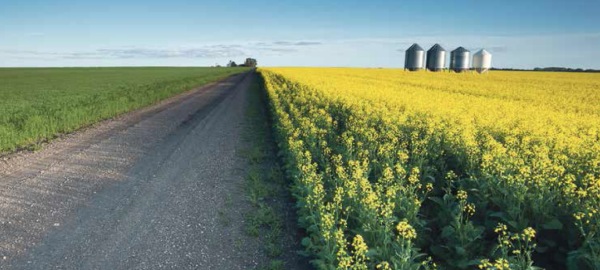
Rotation isn’t only about alternating crops and fields — it should also include varieties and herbicide-tolerance systems
After challenging conditions for last year’s harvest and this spring’s seeding, most growers are focusing on this year’s crop rather than looking ahead to next spring. But what they’re seeing in the field this year can provide valuable information for planning next year’s crop.
“Once they have planted and sprayed and confirmed the weed problems in their field, their current crop mix and herbicide-tolerance system, then they have the information they need to start thinking about options for next year,” says Scott Anderson, manager of agronomic services for Crop Production Services (CPS) in northwest Saskatchewan.
Keith Gabert, a Canola Council of Canada agronomy specialist in central Alberta, says careful scouting and recordkeeping can really help variety selection for next year.
Read the rest of the article on Western Producer.
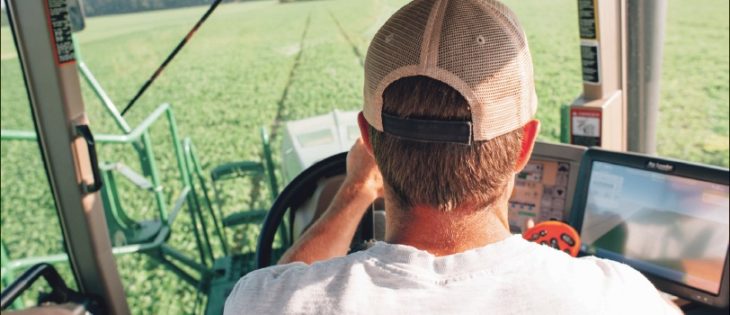
The technology offers a lot of promise, but every piece of equipment needs to speak the same language
Most Prairie grain farmers today are collecting data. Their combines, seeders and sprayers have the tools needed to measure, calculate, evaluate and report just about every activity in the field. But a recent survey indicates only about one-third of those collecting the data are putting it to work. What’s standing in the way?
“Taking the time to prioritize and properly document things such as application rates and field-scouting details, is one of the biggest challenges for growers, whether by entering it directly into the system or using a notepad,” says Scott Anderson, manager of agronomic services for Crop Production Services in northwest Saskatchewan. But he says recording it digitally is key, as it’s the only way advisers can access and use the information.
“A lot of the monitors in the machinery can log data which makes it easier. But now we need to work on pulling that data together and using it.”
Kris Klammer, who farms near Vegreville, Alberta agrees, and says it’s question of good data in, good data out.
Read the full article on Western Producer.

Canola growers have a lot of different options each year. One option is to sign a contract to grow a specialty canola variety. What do farmers consider when they make that decision?
Two prairie growers share their experiences with Nexera canola and their thoughts on growing canola in general.
More than a commodity
Renn Breitkreuz, a grain farmer near Onoway, Alta., likes the idea of growing a crop that has some differentiation from a pure commodity crop. “The guys contracting Nexera see a value in the crop. They are willing to pay extra and that value flows down the chain so that growers are receiving a bit of a premium,” says Breitkreuz.
Read the complete article Western Producer.
Part 3 of the series.
 Annemarie Pedersen Communications