
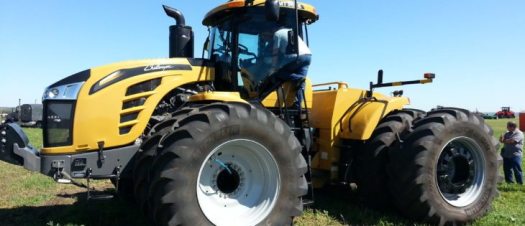
As Canadian farms grow, so does the demand on the equipment needed to work on them, and that includes the tires. A bit of care and maintenance on where the rubber hits the road — or in this case the soil — can pay off in longer tire life and higher machinery efficiency.
Know your equipment
Tire maintenance should start when the equipment is delivered. The tires will be inflated at an appropriate level for shipping, which will likely be more pressure than needed for the work on the farm.
Knowing the equipment, axle weights, and the work to be done is critical. “Is it going to be semi-mounted or fully mounted? This would affect the axle weight and therefore the pressures required to do the job optimally,” says Mike Pantaleo, an agricultural engineering support manager for Michelin North America.
“It’s not like a passenger vehicle where the weight and loads are pretty consistent. In farming there could be two or three optimum pressure levels depending on the work that they’re doing and the implement that they are using,” he says.
Read the full article on the Western Producer website.
 Annemarie Pedersen Communications