
Well this was a first for me…and a lot of fun! Check out my interview the Shark Farmer himself, Rob Sharkey and out discussion on advocacy for agriculture, sustainable beef, food prices, pencils, chuckwagon races and more here.
Well this was a first for me…and a lot of fun! Check out my interview the Shark Farmer himself, Rob Sharkey and out discussion on advocacy for agriculture, sustainable beef, food prices, pencils, chuckwagon races and more here.
Why Omega-9 Oils?
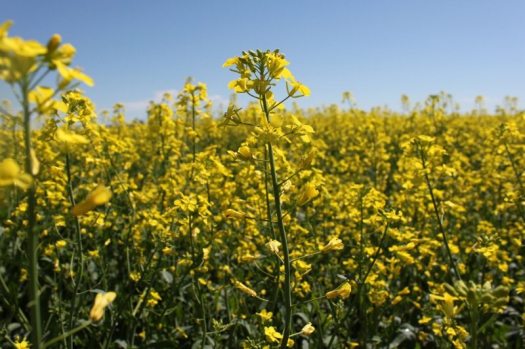
Of the thousands of acres of Nexera canola grown every year across the Prairies, the vast majority is processed here in Canada and shipped as oil to the United States for use in restaurant frying and packaged goods.
Changes in the U.S. Food and Drug Administration’s (FDA) views on partially hydrogenated oils (PHOs) — which are considered the primary dietary source of artificial trans fats in processed foods — are driving demand for the Omega-9 Canola Oil. In June 2015 the FDA released its final determination that PHOs are not deemed “Generally Recognized as Safe” (GRAS).
Partial hydrogenation is an industrial process to help stabilize oil. Trans fats are created during that process. The FDA has removed the GRAS status for products that contain trans fats, including partially hydrogenated soybean oil. This has opened the door for Nexera.
Read the rest of the article online – Western Producer.
Part 2 of the series.
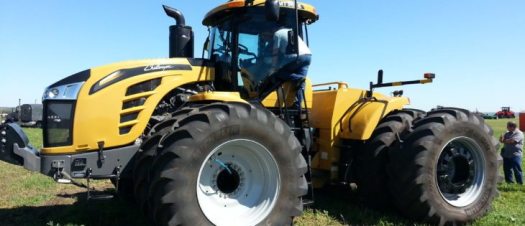
As Canadian farms grow, so does the demand on the equipment needed to work on them, and that includes the tires. A bit of care and maintenance on where the rubber hits the road — or in this case the soil — can pay off in longer tire life and higher machinery efficiency.
Know your equipment
Tire maintenance should start when the equipment is delivered. The tires will be inflated at an appropriate level for shipping, which will likely be more pressure than needed for the work on the farm.
Knowing the equipment, axle weights, and the work to be done is critical. “Is it going to be semi-mounted or fully mounted? This would affect the axle weight and therefore the pressures required to do the job optimally,” says Mike Pantaleo, an agricultural engineering support manager for Michelin North America.
“It’s not like a passenger vehicle where the weight and loads are pretty consistent. In farming there could be two or three optimum pressure levels depending on the work that they’re doing and the implement that they are using,” he says.
Read the full article on the Western Producer website.
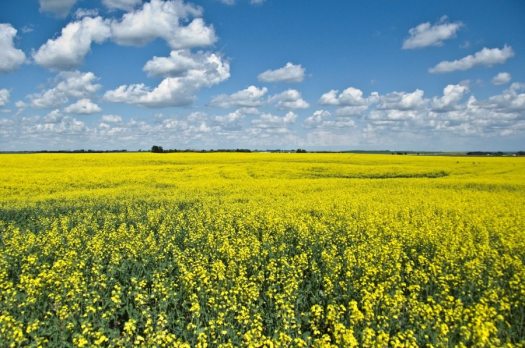
The increasing focus on healthy eating is a large part of canola’s success. Canola oil has one of the lowest saturated fat levels of all vegetable oils.
So, what makes Dow AgroSciences’ Nexera Omega-9 Canola Oil different from the heart-healthy canola oil already available?
Omega-9 genetics has a unique fatty acid profile. Omega-9 Oil has a higher percentage of oleic acid and a lower percentage of linolenic acid than commodity canola oil. This makes it a much more stable oil for some applications such as frying at high temperatures. In just over 10 years, Omega-9 Oils have replaced over 1.5 billion pounds of trans and saturated fats from the North American food supply.
“Omega-9 Canola Oil brings an extra level of value to canola oil which is already a premium product,” says Greg Gingera, North American canola-breeding leader, Dow AgroSciences. “Omega-9 Canola Oil allows access to markets that canola growers can’t currently access with commodity canola oil. Growing the Omega-9 segment will continue to grow greater value for the entire canola industry.”
Read the complete article on Western Producer.
Part 1 of the series.
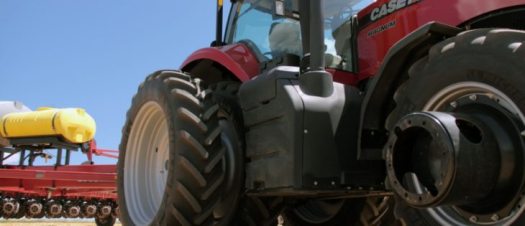
Benefits include better traction, less compaction and better fuel efficiency
Whether it’s for tractors, combines, sprayers or other equipment, choosing the right tires is a critical decision that depends on conditions on your farm.
Start at the beginning
Selection should begin when new machinery is being ordered. The most important factors are equipment weights and what the machine will be used for. Producers need to know the final configuration to ensure they have the right tires for the job.
“When you are adding things like bin extensions it changes the weight of the vehicle and potential load weights. Now the tires that were rated for the original piece of equipment and load may not continue to serve the needs as more equipment and weight is added,” says Mike Pantaleo, Customer Engineering Support, Michelin North America Inc. “And you may not see the same benefits for soil compaction, fuel efficiency, etc.”
View full article on Western Producer website.
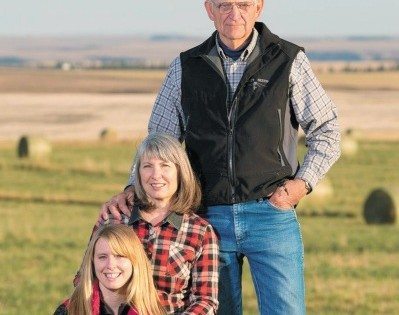
Sarah Hoffmann is a second-generation farmer near Three Hills, Alta. Since 2011, Sarah has farmed full-time with her parents, Garry and Karen Weigum in their pedigree seed operation, Alect Seeds. She married Curtis Hoffmann, a farmer from Oyen in 2015, and now splits her time between the two operations.
Sarah is a dedicated pulse grower and comes by it naturally, as her father first tried yellow peas in 1991 along with the cereal crops he was growing at the time. “My Dad is curious and likes trying new things. It started with about 14 acres and grew from there,” said Sarah, adding farmers are always looking for ways to diversify their crop rotations.
They currently grow wheat, barley, flax, yellow peas, grass and recently added faba beans to the pedigree seed business. “The first year we tried faba beans was in 2013 and there was some buzz around that crop again,” said Sarah.
Read the rest of the article on Western Producer
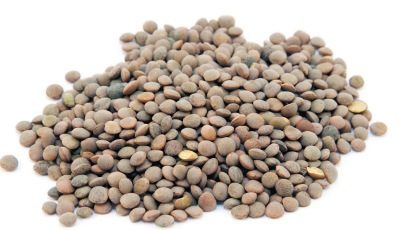
Curt Gessell is the third generation on the family grain farm west of Delisle, Sask. He works with his father Brent and his brother Clint and they grow wheat, canola, sometimes peas but always lentils. “Growing lentils is a very important part of what we do. The crop has allowed us to diversify our crop rotation over the past 30 years,” says Curt.
Curt says they choose lentils because their land seems to suit the crop. And while he believed the crop needed to be grown in a drier climate, he found it tolerated a few years of wetter conditions fairly well.
One of the reasons may be continuing improvements in the varieties available. “These varieties seem to have better disease tolerance and the yield potential has also come along with that. We have seen new weed control options as well,” says Curt.
Read the full article on Western Producer website.
I was very proud to take part in the Cattlemen’s Young Leaders program in 2015. Read more about the 2015 group and program here.

I was very proud to be part of this program during my time at Canada Beef. This interview highlights the work done and the purpose of the program from its early inception to launch. Thanks to Grainews for supporting the program:
 Annemarie Pedersen Communications